
Instalments without a credit card in Egypt: every option in 2026
Only about 3% of Egyptian adults hold a credit card — yet instalments are everywhere. Here are the four routes that need no card at all, what each really costs, and how to work out the true price before you sign.
Yes — you can pay in instalments in Egypt without a credit card. Four routes actually work: instalment apps, in-store plans, consumer finance companies, and a gam'eya. Most of them ask for nothing more than a national ID and a selfie.
This guide walks through all four: who they accept, how long they take, what they really cost — and how to work out the true price yourself before you sign anything.
Why a card was never the requirement
In Egypt, only about 3% of adults hold a credit card. Yet financial inclusion has reached roughly 76% — around 53.8 million people with an account or wallet of some kind.
That gap is precisely why digital instalments exist here. If a card were required, the market would be capped at 3% of the population. So providers built other ways to judge whether you will pay: your ID, your transaction history, your repayment behaviour.
And the numbers say it works. Consumer finance in Egypt reached EGP 96.27 billion in 2025, up 57% year on year, according to the Financial Regulatory Authority.
One caution on the figures: the FRA reports that beneficiary relationships reached 12 million by the end of 2025. Those are cumulative financing relationships, not 12 million individuals — one person can hold several.
Route one: instalment apps
The fastest route, with the least paperwork. You download the app, photograph your ID, take a verification selfie, and wait for a decision. If approved, you get a spending limit to use at partner shops.
You need: a valid national ID, to be 18 or over, residency in Egypt, and a phone.
You don't need: a credit card, a bank account, a salary transfer, or any prior banking history.
Term: usually two to five months.
Cost: a fixed fee, calculated up front and shown before you confirm. Nothing should accumulate after that.
Limit: varies by provider, and grows as you pay on time.
Route two: in-store plans
Many Egyptian retailers — especially in appliances, electronics and mobiles — offer instalments in-house or through a finance partner stationed in the branch.
You need: a national ID, often proof of income or a guarantor, and sometimes a cash deposit.
The advantage: you finish everything in the shop in one visit.
What to watch: comparison is hard. You are inside the shop, looking at one offer, and the salesperson has little reason to walk you through the total. Ask for the total in writing, not just the monthly figure.
Route three: consumer finance companies
These are companies licensed by the Financial Regulatory Authority whose core business is financing purchases. You deal with them directly or through the point of sale.
You need: more documents, typically — ID, proof of income, sometimes a bank statement or employer letter.
The advantage: larger amounts and longer terms, running into years, which suits big purchases like furniture or a car.
The drawback: slower, more paperwork, and harder to approve if your income isn't documented.
Route four: the gam'eya
A gam'eya isn't formal finance — it's a savings circle among people who know each other. Everyone pays a fixed monthly amount, and each month one member takes the pot.
The advantage: no fees, no interest, no credit check.
The drawback: no legal protection whatsoever. If someone stops paying, there is no authority to turn to. And your turn may not fall when you actually need the money.
The four routes, side by side
| Route | Documents | Decision speed | Typical term | Legal protection |
|---|---|---|---|---|
| Instalment app | ID + selfie | Minutes | 2 – 5 months | Yes — FRA-supervised |
| In-store plan | ID, sometimes proof of income | Same day | 6 – 36 months | Depends on the financier |
| Consumer finance company | ID + income + documents | Days | 12 – 60 months | Yes — FRA-supervised |
| Gam'eya | None | Immediate | By agreement | No — none |
What you'll actually be asked for
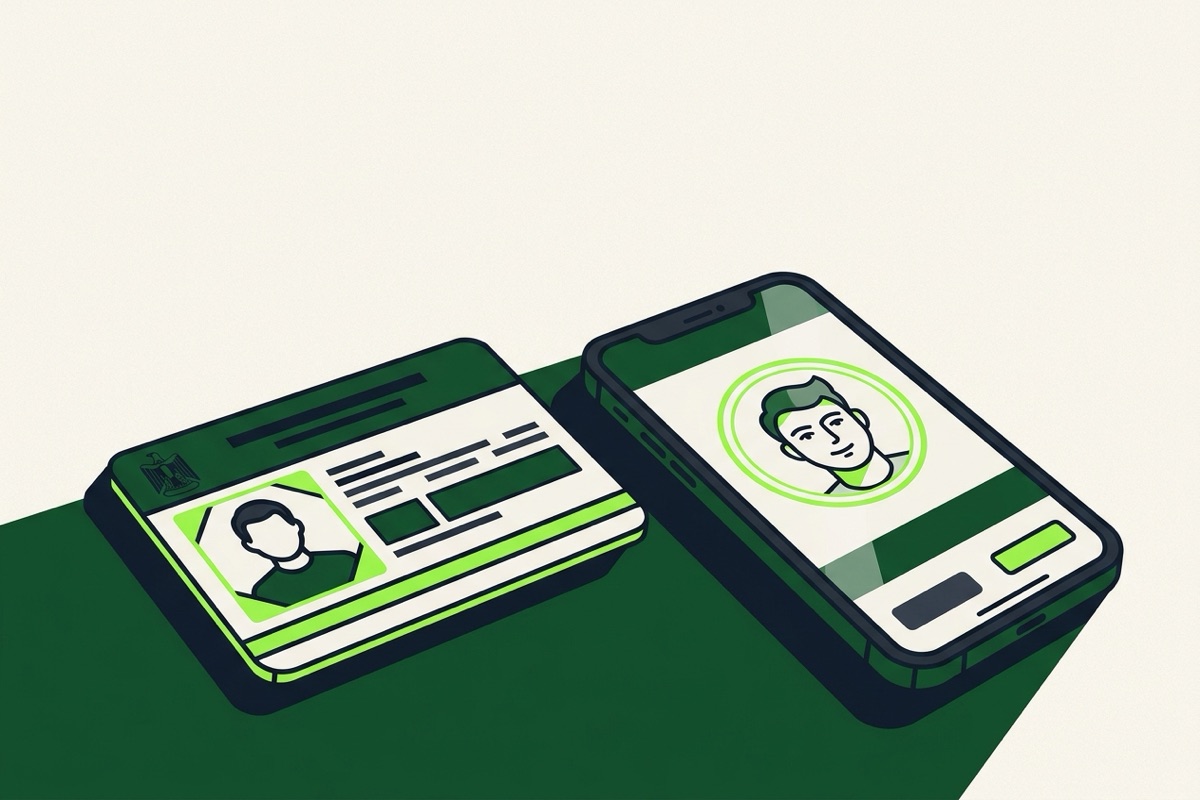
For an instalment app the list is very short: a valid national ID, a phone, and a selfie to confirm you are you. That's it.
For a finance company, or an in-store plan on a large amount, expect to be asked for proof of income — a payslip, a bank statement, or a letter from your employer.
How to work out the true cost

This is the most useful paragraph here, and it is one calculation:
Monthly payment × number of months = what you will actually pay.
Then put that figure next to the cash price of the same product. The difference is the real cost of the plan. Not a percentage, not a rate — pounds.
An example: a product costs EGP 12,000 cash. The plan is EGP 2,600 × 5 months = 13,000. The instalments cost you EGP 1,000. Now you know the number, and you can decide whether it's worth it.
The common trick is to lead with the monthly figure, because it's small and comfortable. The number that matters is the total.
Five things that should stop you
- They won't write down the total. If nobody will give you a written total, it isn't a good deal.
- The late fee has no number attached. You should know exactly what a day or a week of lateness costs.
- Charges that appear at signing. Any fee you hear about for the first time at the signature is a red flag.
- They're rushing you. "Today only" attached to a finance contract is deliberate pressure.
- Only monthly-to-monthly comparisons. If the whole pitch is about the monthly figure and never the total, you're looking at marketing, not information.
Some legal ground worth knowing
As of 2026, licensed consumer finance companies in Egypt must disclose the financing amount, the fees, the annual rate, administrative costs and the total due. That isn't a courtesy; it's an obligation.
Since September 2025, they also cannot charge you anything on the portion of your limit you haven't used.
And one that matters: reporting to I-Score is mandatory as soon as your limit is approved. Paying on time builds your credit history — and late payments are recorded too.
⚠️ There is no binding legal cap on late fees. They vary widely between providers, so ask for the figure before you sign rather than assuming it's small.
The market in numbers
Per the Financial Regulatory Authority, consumer finance in Egypt reached EGP 96.27 billion in 2025, up 57%. The largest category is electronics and appliances at 25.5%, and mobile phones are the fastest-growing line at 8.6%.
That growth wasn't built on credit card penetration — it was built on routes that don't ask for a card at all. Which is exactly why "is it possible without a card?" is now an outdated question.
Read next
- The complete guide to instalments in Egypt — every route in one place.
- Instalment requirements in Egypt — what each route actually asks for.
- Instalments without a bank account
- Where to pay in instalments in Egypt — stores by category.
- Instalments or a personal loan?
Where Lucid sits in this
Lucid is in the first category: an instalment app that needs no credit card, no bank account and no salary transfer. It verifies you with your ID and a selfie, and during working hours the decision takes under 10 minutes.
Limits reach around EGP 50,000, plans run two to five months, and you can use it at more than 500 shops.
Two things stated plainly: Lucid currently serves Cairo, Giza and Alexandria only, with more cities coming. And there is a late fee — as with any financier, and the figure is disclosed before you agree.
This article isn't financial advice. The right route for you depends on the amount, how steady your income is, and how much you need the thing right now.
Frequently asked questions
Can I pay in instalments without a credit card?
Yes. Most instalment apps in Egypt don't ask for one at all. They verify your identity with a national ID and a selfie, then give you a spending limit to use at partner shops.
Do I need a bank account to pay in instalments?
Not necessarily. Instalment apps work without one, and payments run through the app or an e-wallet. Finance companies handling larger amounts may ask for an account.
What documents are required for instalments in Egypt?
For instalment apps: a valid national ID and a verification selfie. For larger amounts from finance companies, add proof of income such as a payslip or bank statement.
Do instalments affect my I-Score?
Yes. Reporting to I-Score is mandatory once your limit is approved. Paying on time builds your credit history; late payments are recorded and affect future financing.
What's the difference between instalments and a loan?
A loan gives you money to spend as you like. Instalments are tied to a specific product from a specific shop. Instalments are usually faster, need less paperwork, and run over shorter terms.
Is interest-free instalment financing real?
Some plans charge a fixed fee set up front that doesn't accumulate. But "interest-free" doesn't mean free. Multiply the monthly payment by the term and compare it with the cash price.
How long does a decision take?
With instalment apps, usually minutes during working hours. In shops, typically the same day. With finance companies handling larger amounts, it can take days because there is more paperwork.
Can I get instalments as a student or without a work contract?
Often yes. Instalment apps assess eligibility in alternative ways rather than relying only on a payslip, so many people the banking system skips do get accepted. Limits start small and grow with repayment.
What happens if I miss a payment?
You incur a late fee, and the delay is recorded on your I-Score. There is no binding legal cap on that fee, so find out the exact figure before you sign.
Can I pay the balance off early?
Usually yes, but terms differ — some providers reduce the fee, others don't. Ask about the early settlement policy before choosing a plan.
Are instalments available in every governorate?
It varies. Larger finance companies have wider reach, while many apps start in Cairo, Giza and Alexandria and expand from there. Check that your city is covered before applying.